
Overview
Hēl is a Catholic system for organizing your life. Hēl uniquely integrates theology, psychology, and productivity into a practical set of four behaviors, providing an orthodox and holistic solution for organization that’s simple, effective, and works both inside and outside the home. This article explains the philosophy and theology of hēl.
In this article you will:
- Rediscover the true nature of yourself in light of Christ’s Incarnation.
- Learn the three principles of organizing your life.
- Understand the holistic nature of organization and the specific dimension in your life that contains the next breakthrough in your personal development.
Table of Contents:
I. The First Principle of Organizing Your Life: Be God
II. The Second Principle of Organizing Your Life: Be Yourself
III. The Third Principle of Organizing Your Life: Be Fruitful
a. A Fruitful Heart (Emotions & Mindset)
b. A Fruitful Head (Knowledge & Wisdom)
c. Fruitful Hands (Time & To-dos)
IV. Recap
Principle #1: Be God
If you’re feeling a plateau in your spiritual life, it’s because you have yet to fully believe and receive all that God wants to give you. Many Catholics are unconsciously living the original lie of Satan that God holds back, is threatened by their growth, and can’t be trusted (Gen 3:5). God doesn’t hold back. He’s never held back. “Jesus Christ is the same yesterday and today and for ever. Do not be led away by diverse and strange teachings” (Heb 13:8-9).
The goal of the Christian life is to become by grace what God is by nature. The first sentence of the first paragraph of the Catechism of the Catholic Church says the following: “God, infinitely perfect and blessed in himself, in a plan of sheer goodness freely created man to make him share in his own blessed life” (CCC, 1).
In discussing why the Word became flesh, paragraph 460 of the Catechism states the following:
“The Word became flesh to make us ‘partakers of the divine nature’ (2 Pet 1:4): ‘For this is why the Word became man, and the Son of God became the Son of man: so that man, by entering into communion with the Word and thus receiving divine sonship, might become a son of God’ (St. Irenaeus). ‘For the Son of God became man so that we might become God’ (St. Athanasius). ‘The only-begotten Son of God, wanting to make us sharers in his divinity, assumed our nature, so that he, made man, might make men gods’ (St. Thomas Aquinas).
From all eternity, God has always wanted you to participate, fully, in his life. Lovers don’t hold back; they share their lives, wholly and freely.
“Blessed be the God and Father of our Lord Jesus Christ, who has blessed us in Christ with every spiritual blessing in the heavenly places, even as he chose us in him before the foundation of the world, that we should be holy and blameless before him. He destined us in love to be his sons through Jesus Christ, according to the purpose of his will, to the praise of his glorious grace which he freely bestowed on us in the Beloved” (Eph 1:3-6).
Principle #2: Be Yourself
“The man who wishes to understand himself thoroughly – and not just in accordance with immediate, partial, often superficial, and even illusory standards and measures of his being – must with his unrest, uncertainty, and even his weakness and sinfulness, with his life and death, draw near to Christ. He must, so to speak, enter into him with all his own self; he must ‘appropriate’ and assimilate the whole of the reality of the Incarnation and redemption in order to find himself. If this profound process takes place within him, he then bears the fruit not only of adoration of God but also of deep wonder at himself.”
(St. Pope John Paul II, Redemptor Hominis, 10)
The prayer of Principle #1 (Be God) is the prayer of St. Paul to the Ephesians: “that the God of our Lord Jesus Christ, the Father of glory, may give you a spirit of wisdom and of revelation in the knowledge of him, having the eyes of your hearts enlightened, that you may know what is the hope to which he has called you, what are the riches of his glorious inheritance in the saints, and what is the immeasurable greatness of his power in us who believe, according to the working of his great might” (Eph 1:17-19).
If Principle #1 has opened the eyes of your heart, it should raise some questions: “Okay wait a minute. In a deep part of me, I desire to be God, but I’m thinking about this more and I don’t even understand how it could be logically possible for a human like me to be God. Is this heretical?” “Even if I could become God, what happens if that happens? Do I cease to be human? Do I cease to exist?”
These are good and natural questions to ask in response to the astonishing magnitude of Principle #1. Let’s unpack each question one at a time.
Question 1: “How could a human like me be God?”
First, let’s simplify the question by taking you out of it. Scratch out the words “like me” and read the new version out loud:
Question 1a: “How could a human like me be God?”
Cool – now scratch out “How” and read it out loud:
Question 1b: “How could a human be God?”
Now swap the order of “a human” and “God”:
Question 1c: “Could God be a human?”
Right. Exactly. Now it starts to become apparent why Christ is referred to as a “mystery” (Eph 3:4). If being God feels uncomfortable to you, it is because you have become too comfortable with the person of Jesus Christ.
“It is only in the mystery of the Word made flesh that the mystery of man truly becomes clear.” (CCC 359)
Jesus Christ, in a wonderfully incomprehensible manner, is true God and true man. TRUE man, not kinda true man – true man. If you believe in the fullness of Jesus Christ, you believe that a human can be God. If it’s possible for a person to be both God and man, it’s possible for a person to be both man and God. You may have thought that communion of divine and human natures was specially reserved for Jesus. It isn’t. This is your inheritance. God wants to lavish you with and invite you into his very life.
“The greater your knowledge of God becomes, the more you will realize the magnitude of his promises. When God blesses us, he changes our very being so that whatever we were by nature is transformed by the gift of his Holy Spirit, so that we may truly become partakers of his nature.” (St. Bede the Venerable, Doctor of the Church)
Question 2: “Even if I could become God, what happens if that happens?
Do I cease to be human? Do I cease to exist?”
Again, we find our answers in the person of Jesus Christ in whom all “truths find their root and attain their crown” (Gaudium et Spes, 22).
In 680 AD, guided by the leadership of St. Pope Agatho, a synod was held in Rome. This synod produced a letter that was sent out to some Emperors at the time to clarify the belief of Christians. This letter was read out loud one year later during the Third Council of Constantinople (the sixth Ecumenical Council) and was approved by the council Fathers. It provides a profoundly detailed articulation of the Incarnation:
“We confess that one of this same holy and co-essential Trinity, God the Word, who was born of the Father before all ages, in the last times of this world came down from heaven for us and for our salvation and was incarnate by the Holy Spirit and the holy and immaculate and ever-virgin and glorious Mary, our Lady, truly and properly the Mother of God according to the flesh, actually born from her and made true man, the same being true God and true man, God indeed from God the Father, but man from the virgin Mother, incarnate from her flesh, having a rational and intellectual soul; the same consubstantial with God the Father according to divinity and consubstantial with us according to humanity…
We acknowledge, indeed, that one and the same our Lord Jesus Christ, the only begotten Son of God, from two [the Father and Mary] and in two substances [divine and human] subsists, without confusion, without change, without division, without separation, the differences of natures never destroyed on account of the union, but rather the property of each nature preserved and concurring in one Person…”
(Synodal Letter, Omnium Bonorum Spes)
This very rich and detailed articulation of the mystery of the Incarnation is worth re-reading slowly several times. It is summed up well by two lines in a letter written in 449 AD by St. Pope Leo I (Doctor of the Church): “God is not changed by his compassion, nor is man swallowed up by such dignity. For each nature does what is proper to each in communion with the other.”
Divinity does not dissolve or destroy what it touches, it glorifies and blesses what it touches. This is true both for our nature and for our very selves.
“God did not make death, and he does not delight in the death of the living. For he created all things that they might exist…” (Wis 1:13-14)
Too many Christians have mistakenly believed that the essence of holiness is self-rejection. Nothing could be further from the truth. We can only fully be ourselves when we fully enter the life of God. And we can only fully enter the life of God when we are fully ourselves. Self-rejection is entirely antithetical to the nature of God. God is the very sharing of life between three eternal and perfect persons: Father, Son, and Holy Spirit:
“Trinity in unity and unity in Trinity, a unity indeed of essence, but a Trinity of Persons… God the Father, God the Son, God the Holy Spirit, not three gods, but one God, Father and Son and Holy Spirit; not a subsistence of three names, but one substance of three subsistences” (Omnium Bonorum Spes).
In God, diversity is unity and unity is diversity. In God, the Father is Glorified by the Son being the Son and the Holy Spirit being the Holy Spirit. Distinction is not division, it is the grounds for authentic communion and mutual glorification.
“Keep your heart with all vigilance; for from it flow the springs of life” (Prov 4:23). God doesn’t want you to sacrifice your heart; he wants you to live in and from it. This sanctity of self is affirmed in scripture: “He who gets wisdom loves himself” (Prov 19:8). “You will seek me and find me; when you seek me with all your heart” (Jer 29:13). “You shall love the Lord your God with all your heart, and with all your soul, and with all your strength, and with all your mind; and your neighbor as yourself” (Luke 10:27). The sanctity of self is also affirmed by tradition. “Self-preservation is a law of nature, which it is wrong to disobey” (Pope Leo XIII, Rerum Novarum). “Being a person means striving towards self-realization” (St. Pope John Paul II, Mulieris Dignitatem).
You image God in your otherness, in being a unique person distinct from him. Like a father rejoicing in seeing his son become “his own man,” or a generous mother’s heart being filled as her daughter “grows into a fine young woman,” when God sees us develop and flourish in freedom, he looks at us and says, “This at last is bone of my bone and flesh of my flesh.” By being yourself, you participate in the divine harmony of love.
If you receive God’s spirit and life into your hearts, you do not lose your heart, you regain it. Purity of character is not the heart shrinking, it is the heart expanding. Self is restored and let loose. Unburdened from the tyrannical desires of disordered independence and disordered dependence, you are set free (John 8:32) and your sight is restored (Matthew 5:8). God wants you to experience deeper and deeper regeneration of yourself until, God willing, he can speak to you words like that spoken by Virgil to Dante at the gates of heaven:
“I’ve led you here by strength of mind, and art; take your own pleasure for your leader now. You’ve left the steep and narrow ways behind… No longer wait for what I do or say. Your judgment now is free and whole and true; to fail to follow its will would be to stray. Lord of yourself I crown and mitre you.”
– Dante Alighieri, Purgatorio XXVII
Principle #3: Be Fruitful
“His divine power has granted to us all things that pertain to life and godliness, through the knowledge of him who called us to his own glory and excellence, by which he has granted to us his precious and very great promises, that through these you may escape from the corruption that is in the world because of passion, and become partakers of the divine nature. For this very reason make every effort to supplement your faith with virtue, and virtue with knowledge, and knowledge with self-control, and self-control with steadfastness, and steadfastness with godliness, and godliness with brotherly affection, and brotherly affection with love. For if these things are yours and abound, they keep you from being ineffective or unfruitful in the knowledge of our Lord Jesus Christ. For whoever lacks these things is blind and shortsighted and has forgotten that he was cleansed from his old sins” (2 Pt 1:3-8).
Divinization is not sterilization, it is activation. We are made in the image and likeness of the Creator. When we receive his life back into our hearts, our creativity is regenerated and we manifest his likeness and glory through our creative work. “Work is a fundamental dimension of man’s existence on earth,” writes Pope John Paul II in his encyclical, Laborem Exercens. “It is not only good in the sense that it is useful or something to enjoy; it is also good as being something worthy, that is to say, something that corresponds to man’s dignity, that expresses this dignity and increases it.”
It is true that God invites us to collaborate with him in the redemption of the world. It is also true that work does not derive its meaning from the presence of evil. Work is meaningful in and of itself. “Even had man never fallen from the state of innocence, he would not have remained wholly idle,” writes Pope Leo XIII in his 1891 encyclical, Rerum Novarum. Rather, work would’ve been man’s “free choice” and “delight.”
Work is Godly. “The moment comes when we can no longer distinguish where our prayer ends and our work begins, because our work is also prayer, contemplation, true mystical life of Union with God…” (St. Josemaría Escrivá).
Work is essential and life-giving self-expression. In clarifying the mystery of the Church in his encyclical Mystici Corporis, Pope Pius XII writes, “Far from the truth is the dangerous error of those who endeavor to deduce from the mysterious union of us all with Christ a certain unhealthy quietism. They would attribute the whole spiritual life of Christians and their progress in virtue exclusively to the action of the divine Spirit, setting aside and neglecting the collaboration that is due from us… For if in our mortal body the members are strengthened and grow through continued exercise, much more truly can this be said of the social Body of Jesus Christ, in which each individual member retains his own personal freedom, responsibility, and principles of conduct.”
Work is how we manifest God. “Christianized humanity is made up of various personalities, no one of which can refuse to function without impoverishing the group and without depriving the eternal Christ of a part of His kingdom. Christ reigns by unfolding Himself in men. Every life of one of His members is a characteristic moment of His duration; every individual man and Christian is an instance, incommunicable, unique, and therefore necessary, of the extension of the ‘spiritual body.’ If you are designated as a light bearer, do not go and hide under the bushel the gleam or the flame expected from you in the house of the Father of all… All roads but one are bad roads for you, since they diverge from the direction in which your action is expected and required. Do not prove faithless to God, to your brethren, and to yourself by rejecting a sacred call” (A.G. Sertillanges, The Intellectual Life).
Yet not all work is fruitful. It is very common for work to become imbalanced and fail to bear fruit. Within the art of organization, there are three key areas to balance in order to be fruitful:
- The Heart: the area of your emotions & mindset.
- The Head: the area of your knowledge & wisdom.
- The Hands: the area of your time & to-dos.
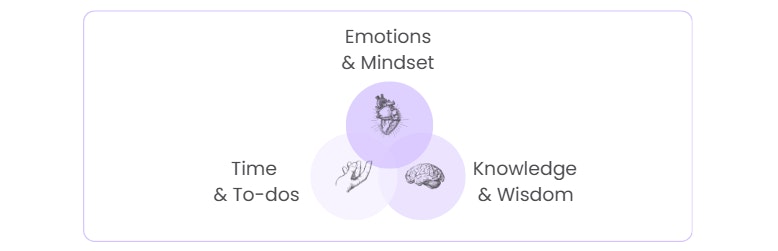
When these three areas fall out of balance, work becomes barren. There are three main forms of barrenness:
- The Idolater: this is the person who becomes imbalanced in the area of their emotions and mindset. This is your friend who only talks about their therapist and their “healing.” They’re overly sensitive, overly soft, and overly attached to their “trauma.” They make trauma their God.
- The Ineffective Academic: this is the intellectual glutton who gets lost in thought. Full of knowledge and empty of wisdom, this person is perpetually late, absentminded, and negligent of the day-to-day details.
- The Shallow Workaholic: this is the person who is always busy and burnt-out. They have poor emotional health and neglect to nourish themselves with contemplation.
In contrast to the three forms of barrenness, organized Catholics are fruitful in all three areas of their life: their heart, their head, and their hands.
“The whole human being, and not merely a part of it, was made in the likeness of God” (St. Irenaeus of Lyons, Against Heresies).
A Fruitful Heart
“The heart is the seat not only of feelings, but also of cognition, self-awareness and consciousness, as well as a human being’s other spiritual powers” (Christ Our Pascha, Catechism of the Ukrainian Catholic Church, 747).
Organized Catholics are comfortable in their own skin. They know how to cultivate a resilient mindset that stays calm and clear amid the temptations of fear and self-doubt that are both self-created and sent by the enemy who hates and opposes the spreading of the Gospel.
“For the word of God is living and active, sharper than any two-edged sword, piercing to the division of soul and spirit, of joints and marrow, and discerning the thoughts and intentions of the heart” (Heb 4:12). Imaging God who, as Father, creates through his Word (the Son) with his breath (the Holy Spirit), organized Catholics are competent in the use of their words and breath to create healing and clarity in their own hearts and in the hearts of those they befriend. They understand how to stay calm and Christ-centered when their neighbor shares stories from their past that are charged with shocking or intense emotion. They know how to unlock and release emotions that have been trapped inside. They rekindle new life in the hearts of themselves and others.
“From the fruit of his mouth a man is satisfied; he is satisfied by the yield of his lips. Death and life are in the power of the tongue, and those who love it will eat its fruits” (Prov 18:20-21).
A Fruitful Head
“To teach in order to lead others to faith is the task of every preacher and of each believer” (CCC, 904).
Spreading the Gospel entails an understanding of the nature of the Gospel as well as the rhetorical skill to express its timeless truths in new and relatable ways. One cannot do this well if one does not have a unified method for organizing their own knowledge. Organized Catholics are skilled at finding the perfect words that speak to the experience of their neighbor. They internalize scripture and other spiritual writing with more depth. They develop their self-knowledge and self-expression through reading, writing, and an ordered life of study.
“The mouth of the righteous utters wisdom, and his tongue speaks justice.”
(Ps 37:30)
Organized Catholics translate their intellectual study into creative projects. They create beautiful art. They develop new technology. They design elegant solutions to complex business problems. Their speech moves and inspires others because “accumulated knowledge gives a hidden resonance to one’s words” (A.G. Sertillanges).
“Blessed is the man who meditates on wisdom and who reasons intelligently.”
(Sir 14:20)
Fruitful Hands
“God knows to act in restfulness and to rest in activity” (St. Augustine).
Organized Catholics create peace and order with their actions. They keep their mind clear and focused. They manage their projects, actions, and ideas with ease. Their choices throughout the day are intentional, smooth, and effective. They orchestrate their responsibilities with flow inside and outside their home.
Recap
Hēl is an organizational method that helps Catholics be saints. Hēl uniquely integrates theology, psychology, and productivity. There are three principles to the hēl method: Be God, Be Yourself, and Be Fruitful.
Hēl provides an orthodox and holistic solution for organizing your life that’s simple, effective, and works both inside and outside the home.
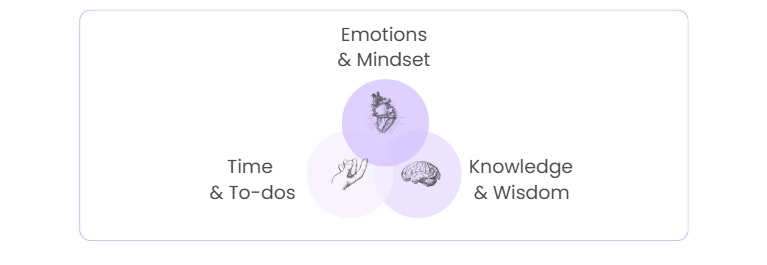
This article provides the theoretical overview of hēl. At the level of practical application, hēl consists of four core behaviors. These four core behaviors are the universal and essential elements of fruitfulness. They are the concrete actions that create fruitfulness in the heart, head, and hands:
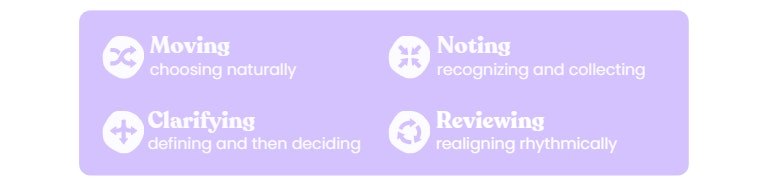
When a Catholic is living an organized life, it is because they have habituated these four core behaviors. If you are interested in learning how to organize your life with hēl, the next practical step is to experience what the four core behaviors feel like. We regularly run live workshops designed to provide you experiential knowledge of these four core behaviors. Check out the Workshops page to see information on upcoming workshops.
Also, I’ve condensed the past five years of coaching into 13 highly potent letters. I call these my Landmark Letters. Landmark Letters is the most comprehensive free resource available for hēl. Coupled with our monthly live workshops, these letters are the best way to begin learning more about hēl.
WARNING: Landmark Letters Is Not For the Faint of Heart!
Please do NOT sign up to read these if you are not committed to studying them. I’ve intentionally added HIGH FRICTION to the process in order to ACTIVELY WEED OUT tire kickers and consumeristic zombies.
After every letter, you will need to manually request the next letter in order to receive it. By default, if you do not manually request the next letter, you will eventually be removed from the entire hēl email list.
This is in order for us to maintain our high standards of communicating only with highly interested people. We’ve done this since day 1 back in 2020, which is why our open rates have always been 10-30% higher than industry averages. We take pride in this because it demonstrates the respect we have for our readers and the care we take for ensuring our emails get delivered to your inbox, rather than your spam folder. In a world of “infinite possibilities,” we are fighting the good fight of upholding the healing power of hard, finite lines.
If you are committed to studying these 13 Landmark Letters, click here, and you will be sent the first letter tomorrow around 12pm ET.
With care,