
“The man who wishes to understand himself thoroughly – and not just in accordance with immediate, partial, often superficial, and even illusory standards and measures of his being – must with his unrest, uncertainty, and even his weakness and sinfulness, with his life and death, draw near to Christ. He must, so to speak, enter into him with all his own self; he must ‘appropriate’ and assimilate the whole of the reality of the Incarnation and Redemption in order to find himself. If this profound process takes place within him, he then bears the fruit not only of adoration of God but also of deep wonder at himself.”
(St. Pope John Paul II, Redemptor Hominis, paragraph 10)
Hēl is designed to reintegrate every fiber of a practitioner’s being. Every practitioner is an image of God and is made to partake in God’s nature – living, by grace, the very life that God lives by nature.
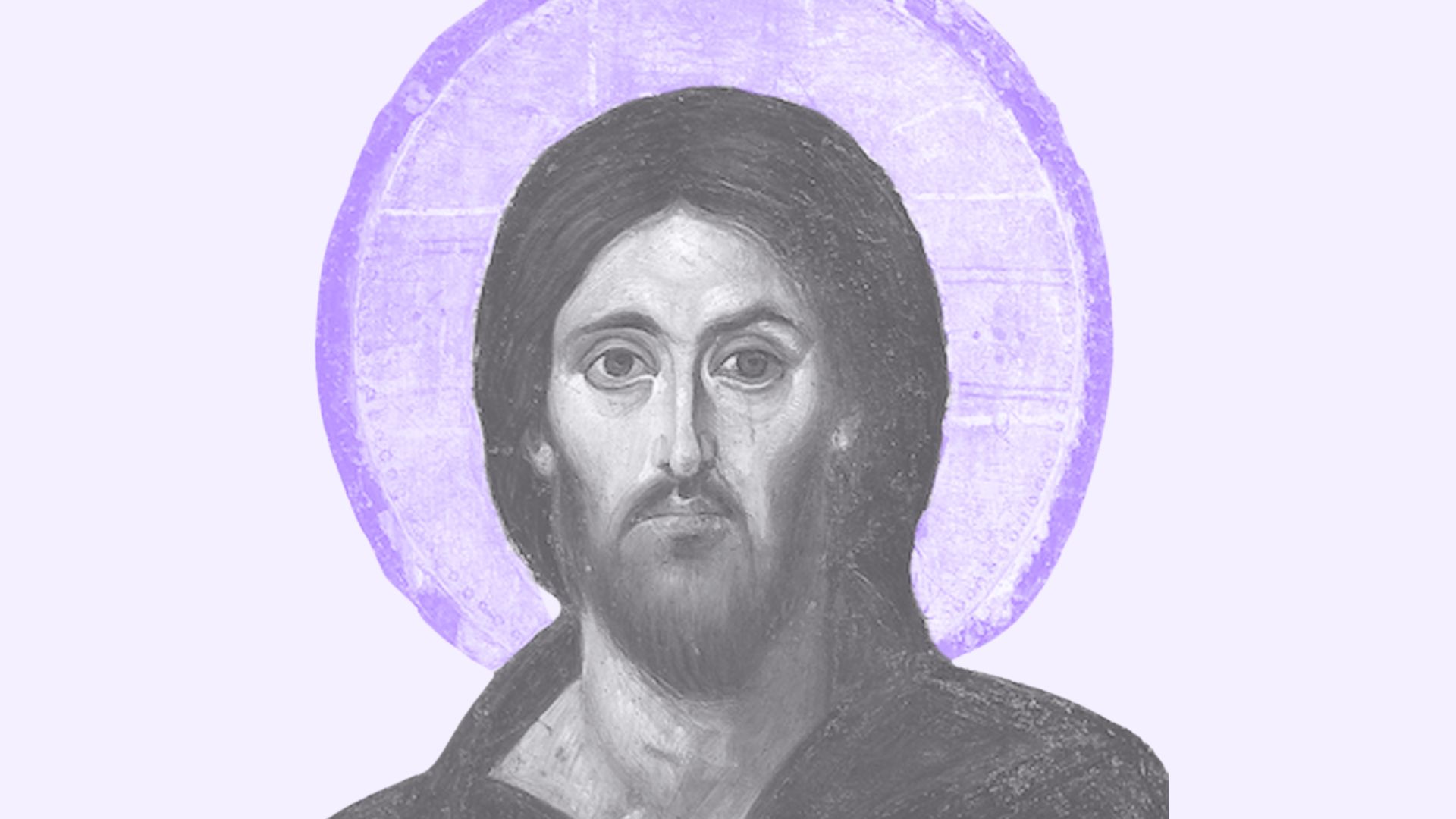
But what is the life of God? It is utterly unknowable. “His divinity is completely unfathomable, and his essence, which is above all, is not what the mind conceives it to be” (St. Gregory of Nyssa, Oration on the Divinity of the Son and the Holy Spirit). At the same time, paradoxically, God’s life is visible, knowable, and revealed in full by Jesus Christ who is “the image of the invisible God” (Col 1:15).
Jesus Christ, in his very being, reveals “the plan of the mystery hidden for ages in God who created all things.” (Eph 3:9) God’s plan is referred to as a “mystery” not because it is unclear, but because it is unfathomably rich. It is beyond our wildest dreams, which is why it is spoken of as “the unsearchable riches of Christ” (Eph 3:8) and “the love of Christ which surpasses knowledge.” (Eph 3:19).
But most people conceive of Jesus Christ in a way that is not mysterious. They conceive of Him as generous, yes, but not mysterious. When we look at Jesus Christ, we should not fully understand how he is real. He should boggle our mind and fill us with wonder. By “wonder” here, I mean something distinct from “reverence”, or “piety”, or “fear of God”, or “repentance” – all of which should be felt when looking at Jesus Christ, and all of which are not wonder. Wonder is a kind of confusion that clarifies and wakes up the mind. We should be very confused when we look at Jesus Christ.
The easiest way to demonstrate this is to look at the first principle of hēl, “Be God”. The most common response to that principle is a request to couch it, qualify it, or bring it down a notch. Usually, the reasoning for doing this is the fact that it seems glaringly obvious that a human cannot become God. And it was glaringly obvious for thousands of years. But the “problem” is that “the Word became flesh and dwelt among us, full of grace and truth; we have beheld his glory, glory as of the only-begotten Son from the Father.” (John 1:14) Now what? What happens to the obvious fact that “a human can’t be God” when, suddenly, God is walking around being a human?
People feel uncomfortable saying they are called to be God because they feel comfortable with the person of Jesus Christ. They think he was “like” God or “like” us, or some incomplete combination of both. But being “like God” or being “like a human” is not mysterious. The “mystery of Christ” (Eph 3:4) is that full divinity and full humanity coexist within a single person.
Is it blasphemy to believe that divinity can co-exist with humanity? Many at Jesus’ time believed it was:
“The Jews took up stones again to stone him. Jesus answered them, ‘I have shown you many good works from the Father; for which of these do you stone me?’ The Jews answered him, ‘We stone you for no good work but for blasphemy; because you, being a man, make yourself God.’ Jesus answered them, ‘Is it not written in your law, ‘I said you are gods’? If he called them gods to whom the word of God came (and Scripture cannot be nullified), do you say of him whom the Father consecrated and sent into the world, ‘You are blaspheming’, because I said, ‘I am the Son of God’? If I am not doing the works of my Father, then do not believe me; but if I do them, even though you do not believe me, believe the works, that you may know and understand that the Father is in me and I am in the Father.” (John 10:31-38)
It is not blasphemy to believe that divinity and humanity can coexist in a single person. It is blasphemy to not believe it, for to not believe it is to not believe in the person of Jesus Christ.
And it would be yet another mistake to believe Jesus Christ to be true God and true man, but to view that as something specially reserved for Jesus alone. Jesus not only reveals the image of the Father; he also reveals the image of man. “I, therefore, a prisoner for the Lord, beg you to walk in a manner worthy of the calling to which you have been called… until we all attain the unity of the faith and of the knowledge of the son of God, to mature manhood, to the measure of the stature of the fullness of Christ.” (Ephesians 4:1,13)
Jesus Christ saves humanity. He also defines humanity. He is the standard of what it means to be a human:
“The truth is that only in the mystery of the incarnate Word does the mystery of man take on light. For Adam, the first man, was a figure of Him Who was to come, namely Christ the Lord. Christ, the final Adam, by the revelation of the mystery of the Father and His love, fully reveals man to man himself and makes his supreme calling clear. It is not surprising, then, that in Him all the aforementioned truths find their root and attain their crown.”
(Gaudium et Spes, paragraph 22)
We can only fully enter our own life when we fully enter the life of God. Fully – not “partially” or “in a way” – FULLY. And this wild mystery of becoming God while remaining human is the ultimate reason why Jesus Christ became man while remaining God:
“The Word became flesh to make us ‘partakers of the divine nature’ (2 Pt 1:4): ‘For this is why the Word became man, and the Son of God became the Son of man: so that man, by entering into communion with the Word and thus receiving divine sonship, might become a son of God’ (St. Irenaeus, Against Heresies). ‘For the Son of God became man so that we might become God.’ (St. Athanasius, On the Incarnation). ‘The only-begotten Son of God, wanting to make us sharers in his divinity, assumed our nature, so that he, made man, might make men gods.’ (St. Thomas Aquinas)”
(Catechism of the Catholic Church, paragraph 460)
Glory to Jesus Christ!
Want to learn more about hēl, the organizational system for being a Saint? Read, Be Organized, Be a Saint: An Introduction to Hēl.